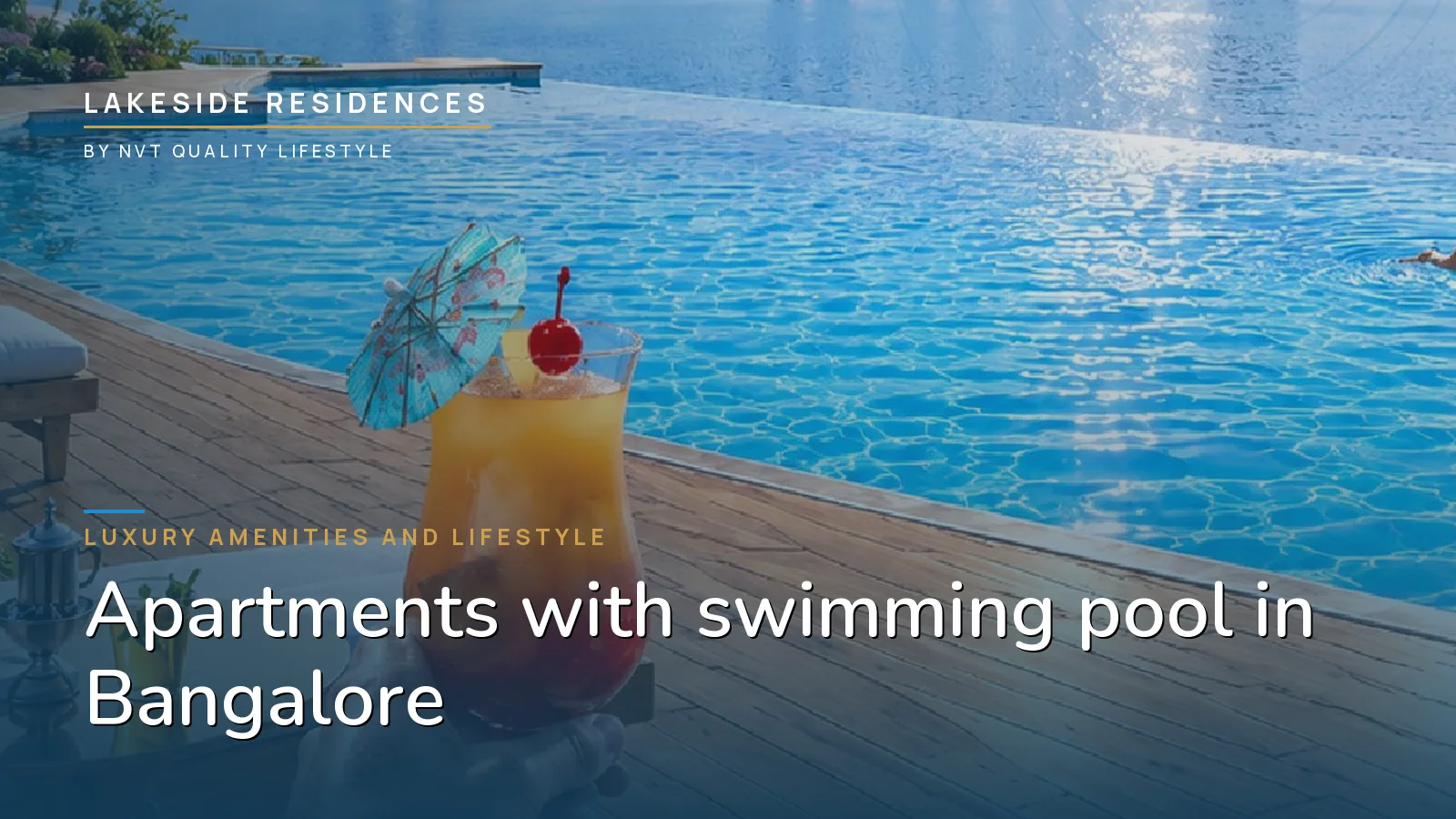
The pool is the amenity that sells the site visit and the amenity most likely to disappoint in the third year of living somewhere. Almost every premium project in the city has one, so the pool itself is not the differentiator; how it was planned, positioned and staffed is. This article covers the parts of a pool decision that brochures leave out, and what to look at before you pay. It is part of the guide to luxury amenities apartments in Bangalore.
Why the pool is the amenity most likely to disappoint
A pool needs two things that equipment does not: a trained team and a good position. If either is missing, the pool becomes something people look at rather than swim in. The common failures are predictable. It is placed in a corner that gets no shade. It has no separate pool for children, so parents spend the visit supervising toddlers. It has one pump room and an unclear maintenance plan. Or it sits where every balcony in the block can see it, which sounds appealing until you realise everyone can also watch you.
None of these show up in a render. All of them show up when you ask for the layout drawing and the operating plan.
What pools a project should have
A single large pool is usually the weakest arrangement for a family project. The better set-up separates the users:
- a main pool, deep enough for laps and adult swimming
- a kids' pool, shallow and separate, so small children are not in the same water as adults
- ideally a deck with shade and seating around both
Lakeside Residences plans a swimming pool and a separate kids' pool among its podium amenities, on the same level as the tot lot, kids' play lawn and senior citizen seating. Grouping them this way is deliberate: a parent can watch one child in the kids' pool while another is on the play lawn a few steps away.
The details a render never shows
When you are shown a pool, ask for these specifics rather than judging the waterline:
- Depth markings and a proper shallow end. Some projects build one uniform depth, which suits neither children nor serious swimmers.
- Filtration and water treatment. Ask how the water is circulated and treated, and whether the plant is sized for the pool volume.
- Changing rooms and showers. Their absence is why some pools end up used mainly for photographs.
- Deck drainage and non-slip surfacing. On a podium in monsoon, water has to go somewhere.
- Shade and wind. A pool in full sun all day is used at 7 am and 6 pm and empty in between.
- Lifeguard and timing rules. Who is on duty, and what are the hours and the child-supervision rules?
A pool next to a lake
There is a particular advantage, and a particular question, when a project sits beside water. The advantage is that a well-positioned pool becomes a place to watch the lake rather than just a place to swim, which is how a pool on a podium terrace with a 300-acre lake beyond it works. The question is whether the pool deck has been planned to face the view instead of facing away from it, and whether drainage and mosquito management have been thought through for a project so close to water.
For Lakeside Residences, every Sky Villa faces the 300-acre lake, so the pool and the lake are seen from the same apartments rather than being competing attractions. That is a layout decision, not a marketing one. The general case for water-facing homes is set out in lake-facing apartments in Bangalore.
What the pool costs and who runs it
Pools are among the more expensive facilities to run. Water, chemicals, pumps, a lifeguard or trained attendant, and regular repairs all land in the maintenance budget, and clubhouse membership and maintenance charges are typically outside the starting price of an apartment. That is not a reason to avoid a project with a pool, but it is a reason to ask how much of the monthly charge goes to the pool and whether the clubhouse membership fee is a one-time or recurring amount. The price guide covers the charges that sit alongside the base price.