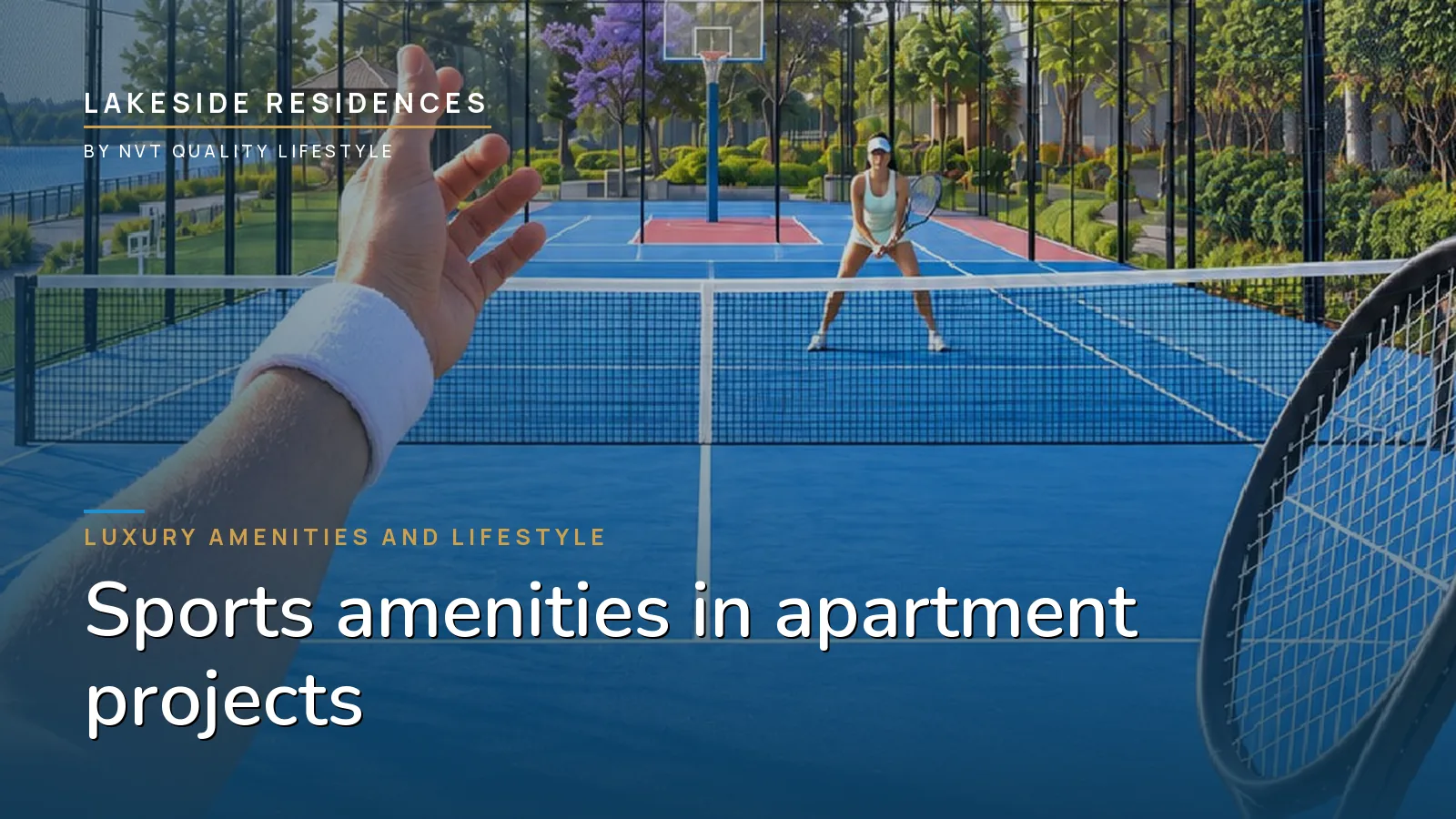
Most brochures show a court. Very few explain how you get a slot on it at 7 am, who repairs the surface when it cracks, or whether the floodlights were sized for evening play. That gap is where sports amenities quietly stop working, and it is why a project with three courts can end up less useful than one with a single well-run one. This article looks at what to count, what to check, and how a sports village is usually planned. It sits within the guide on luxury amenities apartments in Bangalore.
What counts as a sports amenity
The word covers a wide range, and not all of it needs the same investment. Broadly, sports amenities fall into three groups:
- Racquet and ball courts such as tennis, badminton, basketball and pickleball, which need a proper surface, markings, lighting and a net system that is replaced periodically.
- Field and pitch facilities, including a cricket pitch, which need netting, open space and some tolerance for noise.
- Cards and tracks, such as a jogging track, which are cheap to build and easy to maintain, and which tend to be used by the most people, at the most hours.
A project does not need all three. It does need to be clear about which it is building and how they will be shared.
A sports village, planned as one
At Lakeside Residences, sport is not a scatter of courts around the towers but a dedicated five-acre sports village within the township, reached from the 1.1 km lakeside promenade. It is planned to include tennis, basketball, a cricket pitch, pickleball, a jogging track and an amphitheatre.
| Facility | What makes it work in practice |
|---|---|
| Tennis courts | Resurfacing schedule, wind screening, evening lighting and a booking system |
| Basketball half or full court | Solid flooring or an all-weather surface, real hoops and clear markings |
| Cricket pitch and nets | Netting and open space, plus agreed times for practice to keep neighbours |
| Pickleball courts | Correct line markings and a quiet surface, since the game is played close to homes |
| Jogging track | A shaded route, even surface and distance markers |
| Amphitheatre | Seating, staging and event scheduling that does not clash with neighbours |
Grouping the facilities is a planning choice with real consequences. When courts and tracks sit away from the towers, evening play does not carry into bedrooms. When they sit under a balcony, every evening match is a decision between sport and quiet.
Get floodlights and timings right
The single biggest reason sports facilities go unused is that nobody can book them at the hours they are free. Most residents want to play before work or after it, which means the courts see their heaviest load at the two ends of the day: early morning and after sunset. That makes lighting and scheduling the deciding factors.
Ask what lighting is planned for the courts, whether it is aimed to avoid spill into homes, and how booking works. A residents' booking app with hourly slots, a sensible limit per household and an evening priority system will get far more use out of two courts than an open-access policy that produces arguments.
Coaching, families and the school run
Courts are used differently by different households. Adults want slots. Children want structured coaching, and a cluster of children playing pickleball or basketball after school is often what keeps a sports area alive. If a cricket pitch or tennis court matters to you, ask whether coaching, a children's sports programme or a residents' league has been discussed, and whether the township has a place for that to happen without clashing with adult bookings.
The international schools near Sarjapur Road matter here too, since school timings shape when parents can use the facilities at all.
Maintenance, surfaces and the long term
Equipment and surfaces wear out faster than buildings, and the amenity budget has to fund them. Synthetic courts, nets and lighting are recurring costs rather than one-off ones. That is a maintenance question, not a purchase question, but it is part of why maintenance and corpus charges, clubhouse membership, infrastructure charges, floor-rise charges, PLC, SDR and GST sit outside the starting price of an apartment. Ask how the association intends to fund replacements, and look at the price guide for how the charges are structured.
At Lakeside Residences, sport is one part of 129+ amenities planned across three levels, alongside the Lakeview Clubhouse and the podium facilities. The amenities page lists them together. Since the project is coming soon and K-RERA registration and possession are not yet published, treat the facility list and specifications as indicative and verify the registration on the Karnataka RERA portal.